

Clear records
history record
Back Up Camera System with 1080P Clarity and Advanced Night Vision
Introduction to Back Up Camera System
Driving in today’s busy traffic requires precision and situational awareness. A back up camera system provides drivers with a real-time view of the rear environment, reducing blind spots and minimizing the risk of accidents. With modern advancements in sensors, imaging technology, and durability, these systems are no longer luxury add-ons but essential tools for vehicles ranging from compact cars to large RVs, trucks, and SUVs. In this blog post, Shenzhen HOPE, a high quality vehicle camera system seller, will share the features of 1080P backup camera system for sale, its specifications, benefits, etc.
High-Definition Visuals with Backup Camera Monitor
One of the most important features of a backup camera system is the quality of its display. This system integrates a 7-inch HD monitor with 1080P clarity, offering sharp, crystal-clear images. Whether parking in a crowded lot or reversing into a narrow driveway, the high-definition visuals ensure every detail is visible.
Video Resolution: 2560×1440, S/30 frame
Rear Camera Resolution: 1920×1080
Image Sensor: 200W built-in GC2053 CMOS
Camera Angle: 100 degrees
The combination of a wide viewing angle and HD resolution gives drivers an expanded field of view, reducing blind spots and making it easier to detect obstacles, pedestrians, or vehicles approaching from behind.
Advanced Night Vision in Back Up Camera Solutions
A key advantage of this back up camera system is its enhanced night vision capabilities. Equipped with starlight light compensation and IR night vision, the system ensures clear imaging even in poorly lit environments.
Minimum Illumination: 0.5 Lux / F1.2
Image Frame Rate: 1080P @25fps / 30fps
Night Vision Distance: up to 80 feet
This allows drivers to reverse safely in dim garages, poorly lit alleys, or during nighttime driving. The camera maintains detail without excessive glare, enabling confident maneuvering in all lighting conditions.
Durability and Weather Resistance in Backup Camera Setup
When investing in a rearview camera system, durability is crucial. Designed for real-world driving challenges, this system is both waterproof and shockproof, with an IP68 rating. Whether facing rain, snow, or dusty terrain, the unit operates reliably without compromising image quality.
Operating Temperature: –20℃ ~ 75℃
Storage Temperature: –30℃ ~ 85℃
Operating Humidity: 15–65%RH
Cover Material: Plastic with strong environmental resistance
This rugged construction makes it suitable for commercial trucks, RVs, and outdoor vehicles that endure extreme conditions. Drivers can rely on consistent performance regardless of the climate.
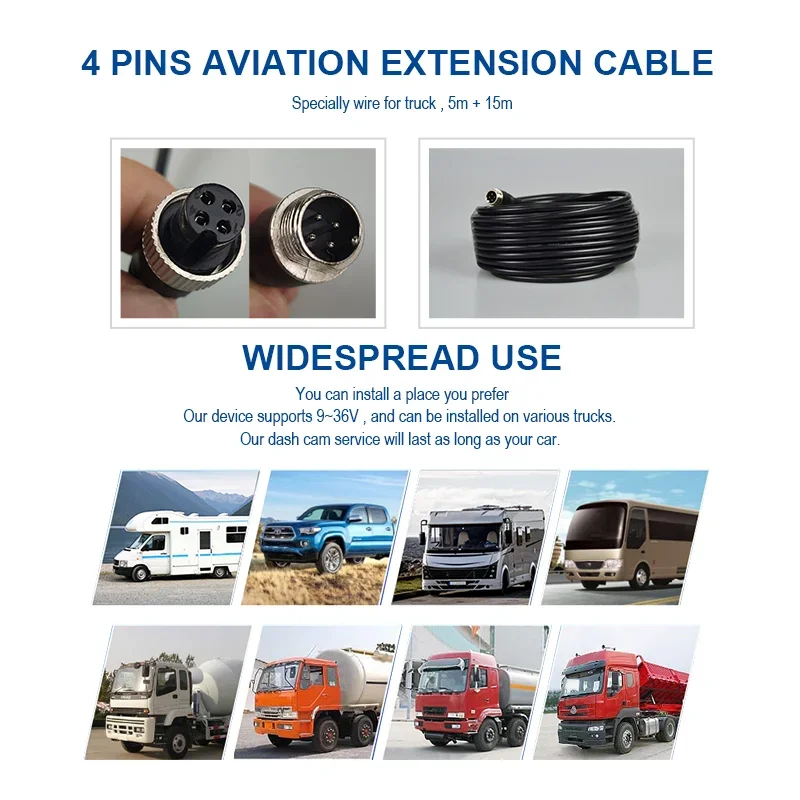
Technical Specifications of Backup Camera System
To appreciate the engineering behind this product, it’s important to review its technical specifications:
Image Sensor: 1/2.9" GC2053 CMOS
Electronic Shutter: 1/50–1/100000s, 1/60–1/100000s
Signal to Noise Ratio: ≥46dB
Video Output: 1.0V P-P/75Ω
Power Supply: DC 9–36V
Current Consumption: ≥90mA
Power Consumption: ≥1W
Storage Card Capacity: Supports up to 256G
These features ensure smooth video playback, minimal noise interference, and compatibility with a wide range of vehicle power systems.
Smart Features of Modern Back Up Camera System
Unlike traditional rearview mirrors, this system incorporates smart functions that improve user interaction and reliability.
Touch TP Support: Enables intuitive control through the display.
Wide Voltage Support: Operates on DC 9–36V, making it compatible with passenger cars, trucks, and buses.
Storage Expansion: Up to 256G memory card ensures ample space for video recording.
These capabilities make the system not only a reversing aid but also a recording solution for daily driving, offering valuable footage in case of traffic disputes or incidents.
Why Choose Backup Camera with Wide-Angle Coverage?
The 100-degree wide viewing angle provides a balanced perspective—wide enough to capture surroundings but not distorted like ultra-wide fisheye lenses. This ensures accurate distance perception, which is crucial when reversing large vehicles such as RVs or trailers.
Drivers benefit from:
Clear detection of objects near the vehicle’s rear corners.
Improved awareness of children or pets in the reversing path.
Enhanced maneuvering during lane changes or parking.
Role of Backup Camera Systems in Vehicle Safety
Regulatory bodies and automotive safety experts emphasize the importance of rearview camera systems in preventing accidents. Studies show that a significant percentage of reversing accidents involve children, pedestrians, or stationary obstacles hidden in blind spots.
By installing a backup camera solution with high-definition clarity and night vision, drivers reduce risks and gain additional confidence in their daily driving routines.
Installation and Integration Considerations
When integrating a backup camera system, installation quality directly affects performance. Factors to consider include:
Positioning of the Camera: Mounted at the rear for optimal visibility.
Wiring and Power Supply: Proper connection to the vehicle’s DC 9–36V power system ensures stability.
Monitor Placement: Installed within the driver’s natural line of sight to minimize distractions.
For fleet managers, professional installation ensures consistency across multiple vehicles, enhancing driver efficiency and safety.
Future Trends in Backup Camera Technology
As vehicles become smarter, backup camera systems are evolving into multi-functional solutions. Future trends include:
AI-Powered Obstacle Detection: Cameras integrated with AI to automatically detect pedestrians and moving objects.
360-Degree Surround View Systems: Expanding visibility beyond the rear to cover all sides of the vehicle.
Wireless Integration: Reducing wiring complexity while maintaining real-time video transmission.
Integration with ADAS (Advanced Driver Assistance Systems): Enhancing lane departure warning, blind spot monitoring, and autonomous parking.
These innovations will make backup cameras indispensable for both personal and commercial vehicles.
Conclusion
A back up camera system is more than just a convenience—it is a safety tool that protects drivers, passengers, and pedestrians alike. With 1080P resolution, starlight night vision, IP68 durability, and wide-angle coverage, this system delivers superior performance in all driving conditions.
From personal cars to commercial fleets, adopting such a system ensures better visibility, reduces blind spot accidents, and provides peace of mind. As automotive technology continues to evolve, backup camera systems will remain at the core of vehicle safety and intelligent driving solutions.