

Clear records
history record
HD Vehicle Dash Cam System for Commercial Fleet Monitoring
In today’s fast-evolving transportation and logistics landscape, fleet operators face increasing pressure to improve safety, reduce operational risks, and maintain full visibility over vehicles and drivers. Traditional monitoring tools are no longer sufficient for modern fleet demands, where real-time awareness and data-driven decisions are essential.
A new generation of HD vehicle dash cam systems is transforming how commercial fleets are managed. By integrating high-definition video recording, AI-powered detection, and connected technologies, these systems go far beyond basic recording devices—they become central control hubs for safety, compliance, and operational efficiency.
In this blog post, Shenzhen HOPE, as high quality real time tracking gps devices china factory, will share the advantages of hd vehicle dash cam system for commercial fleet monitoring.
The Evolution of HD Dash Cam Systems in Fleet Monitoring
Fleet dash cameras have evolved significantly over the past decade. Early models focused primarily on forward-facing recording for incident documentation. Today, systems are equipped with multi-channel inputs, panoramic stitching, and AI-driven analytics.
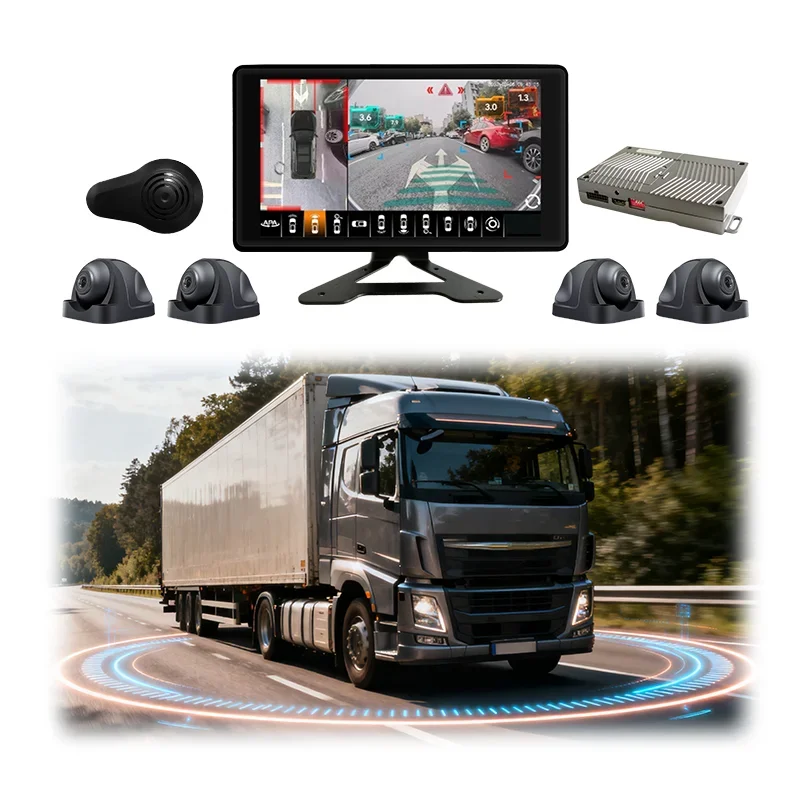
A modern HD vehicle dash cam system for commercial fleet monitoring combines several key technologies:
Multi-camera 360° surround view
AI-based object recognition
Integrated connectivity (4G, WiFi)
GPS positioning and tracking
Cloud-based data access
This convergence of features allows fleet managers to move from reactive incident review to proactive risk prevention.
360° Surround View: Eliminating Blind Spots in Commercial Vehicles
One of the most critical safety challenges in commercial transportation is blind spots. Trucks, buses, and large vehicles inherently have limited visibility, increasing the risk of collisions with pedestrians, cyclists, and nearby vehicles.
A 360° panoramic system addresses this issue by stitching together multiple camera feeds into a seamless bird’s-eye view. This real-time visualization enables drivers to:
Navigate tight urban environments safely
Reduce lane-change risks
Improve parking accuracy
Avoid low-speed collisions
Unlike traditional mirrors or single-lens cameras, this system provides full situational awareness, especially in complex driving scenarios.
AI-Powered Detection for Smarter Driving Assistance
Artificial intelligence is a defining feature of next-generation fleet dash cam systems. Instead of passively recording footage, AI actively analyzes the environment and alerts drivers to potential dangers.
Key capabilities include:
Pedestrian detection in urban zones
Vehicle proximity alerts
Lane departure warnings
Collision risk notifications
These alerts are delivered through both visual and audio signals, ensuring drivers can react immediately without distraction.
By reducing reliance on human perception alone, AI significantly lowers accident probability and enhances overall road safety.
Connectivity and Real-Time Visibility Across Fleets
Connectivity transforms a dash cam from a local recording device into a networked fleet management tool. With 4G and WiFi integration, fleet operators gain access to live video streams and vehicle data from anywhere.
This enables:
Remote monitoring of driver behavior
Instant access to live road conditions
Faster incident verification
Improved dispatch coordination
A real time tracking system becomes essential in this context, allowing managers to track vehicle movements alongside live video feeds. This dual-layer visibility ensures both location and context are always available.
GPS Integration and Intelligent Tracking Capabilities
Accurate positioning is fundamental for fleet efficiency. Integrated GPS modules provide continuous location data, enabling route tracking, historical playback, and operational analysis.
A vehicle real time tracking system enhances decision-making by offering:
Route optimization insights
Delivery time estimation
Unauthorized movement alerts
Geofencing capabilities
When combined with video footage, GPS data provides a complete operational picture—what happened, where it happened, and why.
Additionally, gps tracker real time tracking technology supports compliance requirements in regulated industries, ensuring transparency and accountability.
Multi-Trigger Recording for Complete Event Coverage
A key strength of modern dash cam systems lies in their ability to automatically capture critical moments. Instead of relying solely on continuous recording, intelligent triggers activate recording based on specific events.
Common triggers include:
Turn signal activation
Reverse gear engagement
Radar proximity detection
Speed thresholds
This ensures that important events are captured from the most relevant angles, improving both safety and incident analysis.
Parking Surveillance and Asset Protection
Fleet vehicles are often vulnerable when parked, especially during long-haul operations or overnight stops. A robust dash cam system includes parking surveillance features designed to protect assets even when the engine is off.
Key functionalities include:
24-hour delayed recording
Motion-triggered video capture
Low-voltage battery protection
Event-based recording during inactivity
These features provide an additional layer of security, reducing the risk of theft, vandalism, and unauthorized access.
Data Storage and Video Management Efficiency
Handling large volumes of video data is a challenge for fleet operations. Modern systems address this through flexible storage solutions and intelligent data management.
Dual storage support—such as USB and hard drives—ensures redundancy and scalability. Automatic loop recording prevents storage overflow by overwriting older, non-critical footage.
Advanced systems also offer:
Video segmentation for easy retrieval
Cloud backup integration
Remote download capabilities
Event tagging for quick identification
This streamlined approach minimizes administrative workload while maximizing data usability.
Customization and Compatibility Across Fleet Types
Commercial fleets are rarely uniform. They often include a mix of trucks, buses, vans, and specialized vehicles. A flexible dash cam system must adapt to different vehicle types and operational requirements.
Customizable user interfaces and modular configurations allow:
Integration with different vehicle models
Adaptation to regional regulations
Tailored display layouts for drivers
Scalable deployment across fleets
This flexibility ensures that the system remains effective regardless of fleet size or composition.
Durability and Reliability in Demanding Environments
Commercial vehicles operate under challenging conditions, including extreme temperatures, long driving hours, and constant vibrations. Consumer-grade devices are not designed to withstand such environments.
A commercial-grade HD dash cam system is built with:
Industrial-grade components
Heat-resistant materials
Vibration-proof mounting
Long operational lifespan
This durability ensures consistent performance, reducing maintenance costs and system downtime.
Improving Driver Accountability and Behavior
Driver performance has a direct impact on safety, fuel efficiency, and operational costs. Dash cam systems provide valuable insights into driver behavior, enabling targeted improvements.
Monitoring capabilities include:
Speed tracking
Harsh braking detection
Idle time analysis
Compliance with driving policies
With access to this data, fleet managers can implement training programs, enforce safety standards, and promote responsible driving practices.
Enhancing Operational Efficiency Through Data Integration
Modern fleet management relies on data integration across multiple systems. A dash cam solution that integrates with transportation and fleet management platforms unlocks additional value.
Benefits include:
Unified data dashboards
Automated reporting
Predictive maintenance insights
Improved resource allocation
By combining video, location, and operational data, businesses can make faster and more informed decisions.
Future Trends in Fleet Video Telematics
The development of HD vehicle dash cam systems continues to accelerate, driven by advancements in AI, connectivity, and cloud computing.
Emerging trends include:
Edge computing for faster data processing
5G-enabled ultra-low latency streaming
Advanced driver assistance systems (ADAS) integration
Predictive analytics for risk prevention
These innovations will further enhance the role of dash cam systems as essential tools for intelligent fleet management.
Conclusion
A modern HD vehicle dash cam system for commercial fleet monitoring is no longer just a recording device—it is a comprehensive solution that integrates safety, visibility, and operational intelligence.
By combining 360° panoramic imaging, AI detection, real-time connectivity, and robust data management, systems like the HP-V23 provide a powerful foundation for safer and more efficient fleet operations.
For businesses aiming to reduce risks, improve transparency, and stay competitive in a demanding industry, adopting such technology is not just an upgrade—it is a strategic necessity.