

Clear records
history record
HOPE CCTV's commercial vehicle solutions
Problem
Commercial vehicle operations are facing a dual challenge of safety control and operational management: the large size and numerous blind spots of commercial vehicles significantly increase the risk of collisions during reversing, lane changes, and nighttime driving; in long-haul transportation scenarios, driver fatigue and inattention are prominent issues, leading to a corresponding increase in the risk of cargo theft and damage. On the management side, reliance on manual scheduling results in low efficiency, high empty mileage rates, and delayed maintenance, driving up operating costs. The lack of digital fleet management tools hinders data-driven decision-making – and coupled with varying compliance and risk control requirements across different regions, this further exacerbates the compliance pressure and management complexity of commercial vehicle operations.
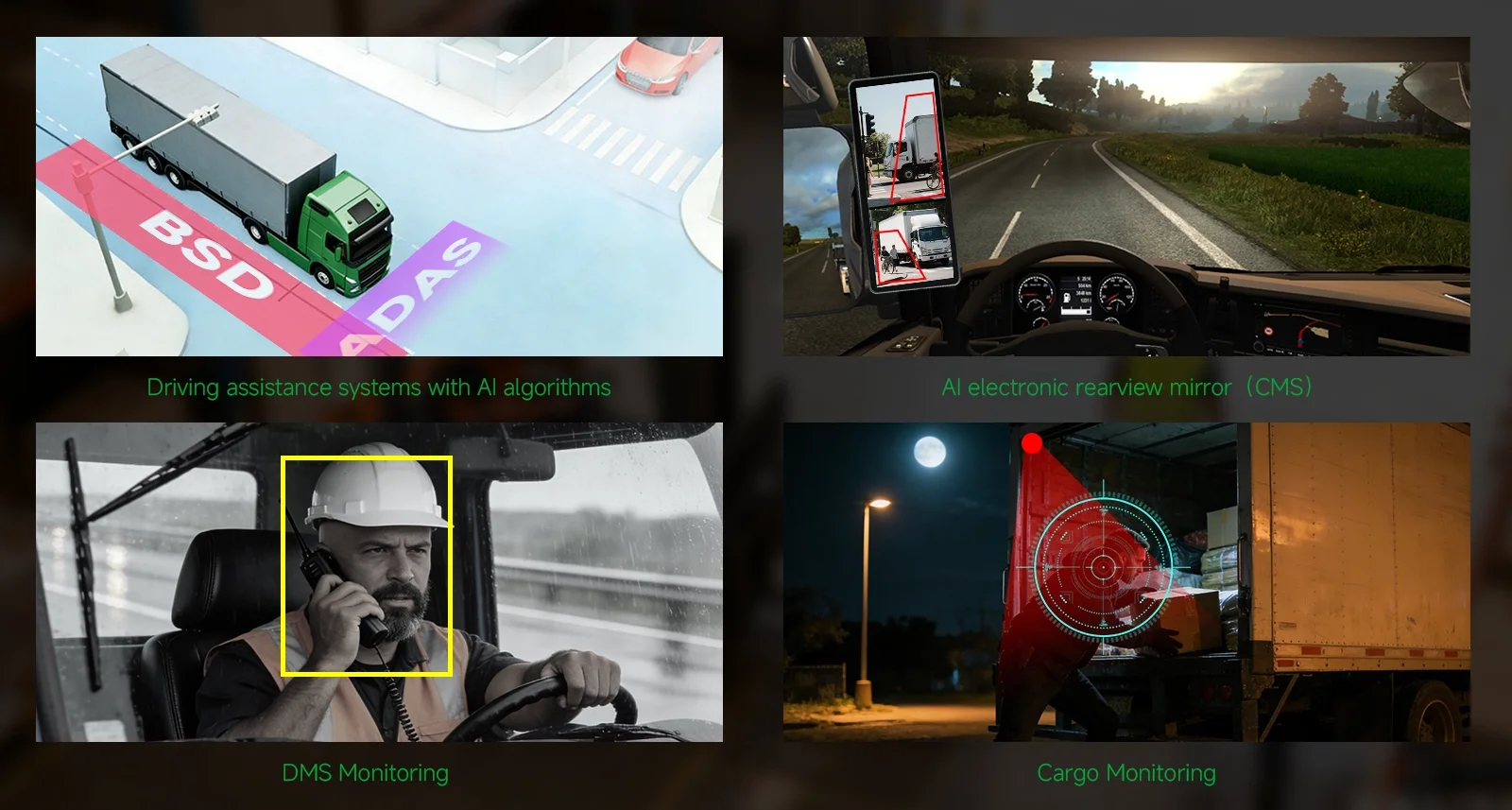 HOPE CCTV's commercial vehicle solution is designed to address key industry challenges: the in-vehicle DMS system can detect and warn of abnormal driver behavior in real time; while the BSD, AI 360° panoramic surround view, and AI CMS systems eliminate blind spot risks. The solution also integrates AI 4G remote vehicle management, cargo compartment monitoring, and driver status monitoring to improve fleet operational efficiency.
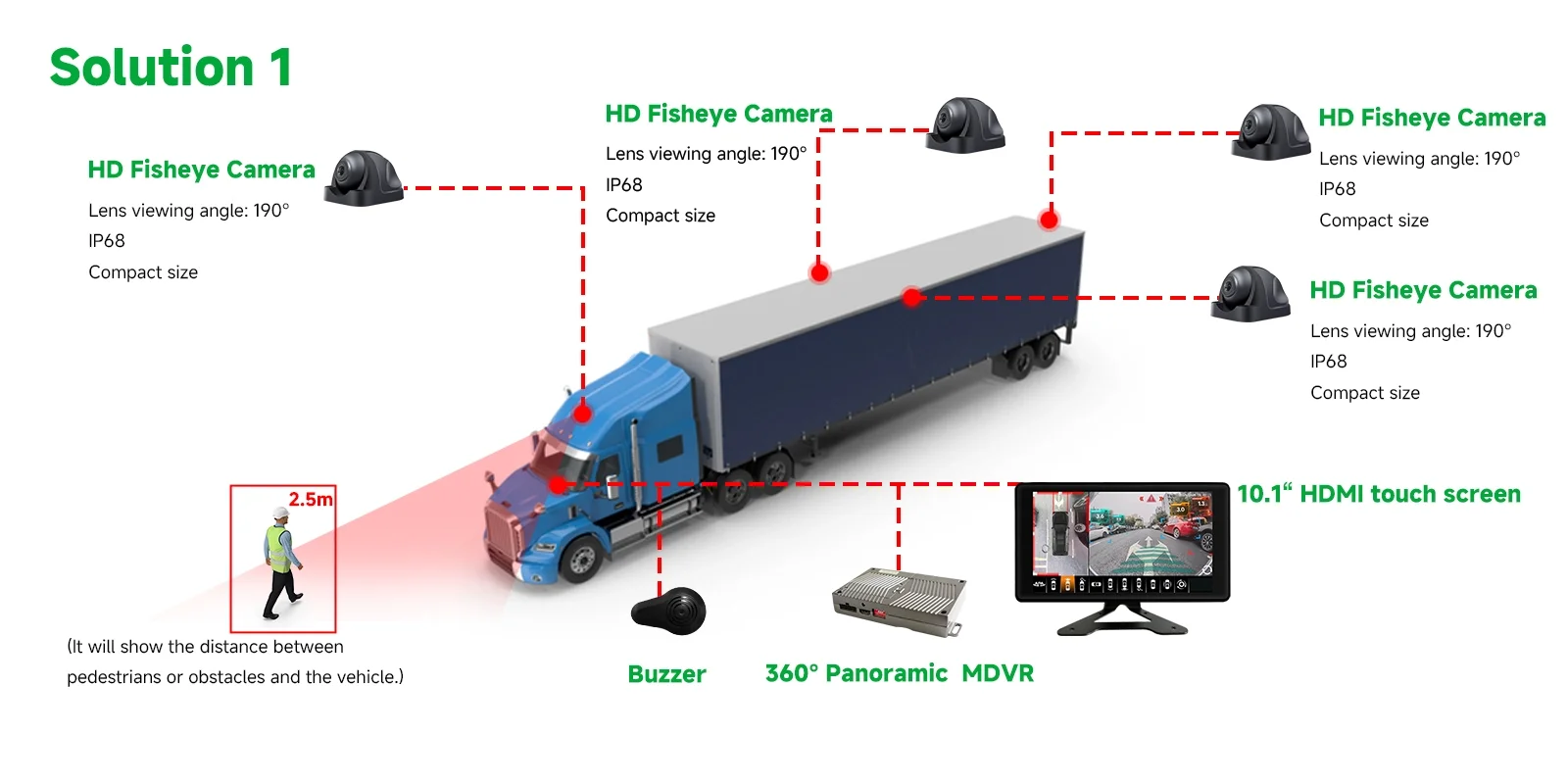 Ai intelligent 360 panoramic driving assistance system
Built-in AI algorithm, integrating BSD full area detection,Built-in AI algorithm, integrated BSD 360 degree detection, is able to detect pedestrians/vehicles/obstacles , and then to give an alarm.(The front and rear views show the distance between pedestrians or obstacles and your vehicle.
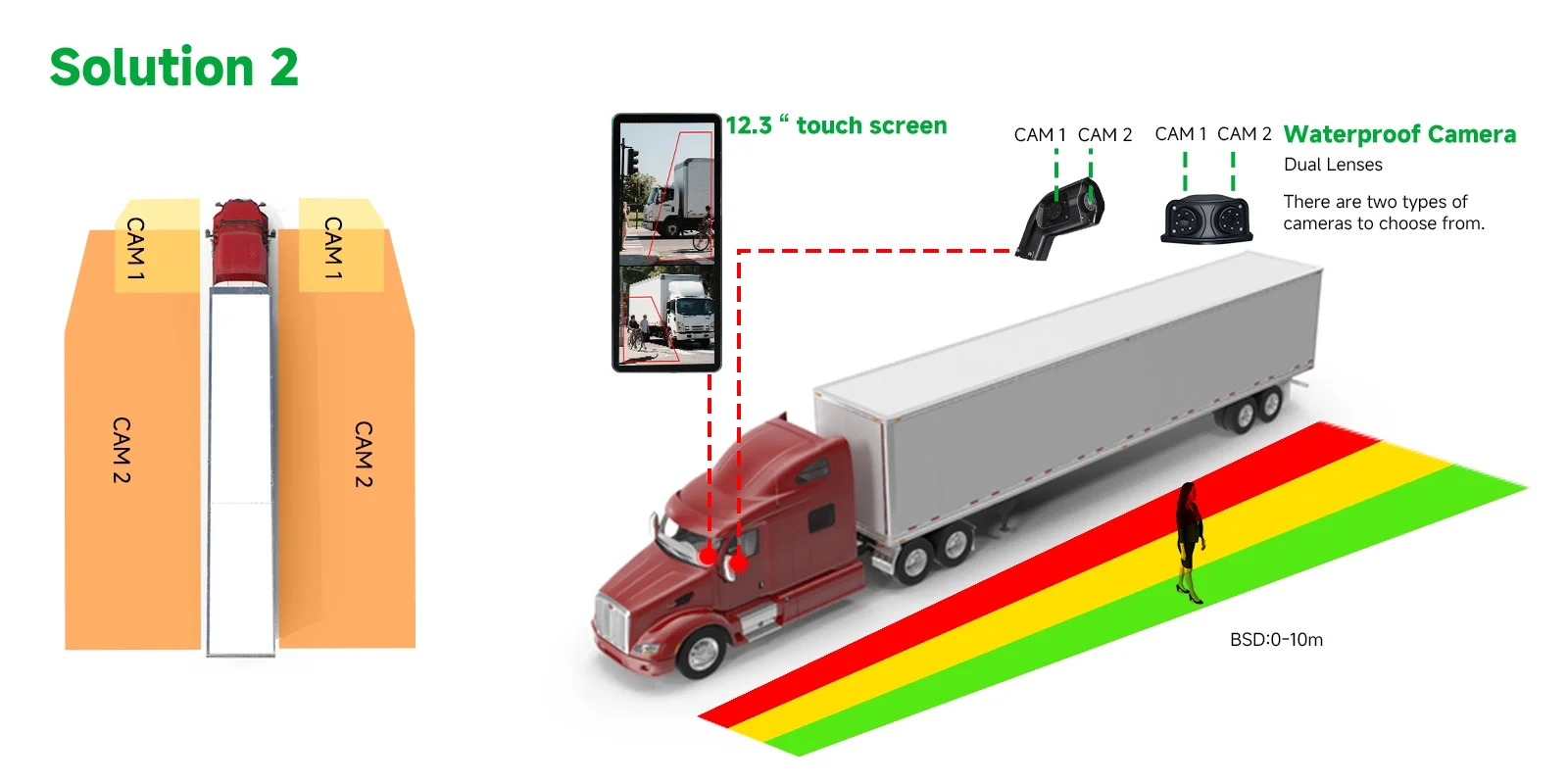
An electronic rearview mirror dashcam
An electronic rearview mirror dashcam with BSD (Blind Spot Detection) functionality: It significantly improves driving safety and reduces traffic accidents caused by blind spots. Especially in busy traffic areas, during lane changes, turns, or entering and exiting stations, drivers can timely understand the situation in their blind spots, avoiding collisions with other vehicles or pedestrians. For instance, during peak hours of congestion, when changing lanes continuously, the BSD system can accurately identify potential collision risks, providing drivers with more reaction time. An electronic rearview mirror dashcam with BSD (Blind Spot Detection) functionality: It significantly improves driving safety and reduces traffic accidents caused by blind spots. Especially in busy traffic areas, during lane changes, turns, or entering and exiting stations, drivers can timely understand the situation in their blind spots, avoiding collisions with other vehicles or pedestrians. For instance, during peak hours of congestion, when changing lanes continuously, the BSD system can accurately identify potential collision risks, providing drivers with more reaction time.
Frequently Asked Questions (FAQ)
1. How does HOPE CCTV’s solution improve commercial vehicle driving safety?
HOPE CCTV integrates DMS, BSD, AI 360° panoramic surround view, and AI CMS systems to comprehensively reduce blind spots and monitor driver behavior in real time. These technologies help prevent collisions during reversing, lane changes, and nighttime driving by providing timely visual alerts and audible warnings.
2. What driver risks can the DMS system detect?
The in-vehicle DMS (Driver Monitoring System) can identify abnormal behaviors such as fatigue, distraction, smoking, phone use, and inattention. When risky behavior is detected, the system issues real-time alerts to reduce accident risks and improve overall driving discipline.
3. How does the AI 360° panoramic driving assistance system work?
The AI 360° panoramic system uses built-in AI algorithms and multi-camera fusion to perform full-area BSD detection. It can accurately identify pedestrians, vehicles, and obstacles around the vehicle and provide distance-based warnings through front and rear visual displays.
4. What are the benefits of the electronic rearview mirror dashcam with BSD?
The electronic rearview mirror dashcam replaces traditional mirrors with a high-definition display and integrates BSD functionality. It enhances visibility in blind zones, especially during lane changes, turns, and station entry or exit, significantly reducing collision risks in congested traffic environments.
5. How does the solution support fleet management and operational efficiency?
The solution combines AI 4G remote vehicle management, cargo compartment monitoring, and driver status monitoring. This enables real-time fleet visibility, optimized scheduling, reduced empty mileage, timely maintenance, and improved compliance across different regions, lowering overall operating costs.