

Clear records
history record
How AI Vehicle Driver Monitoring System Transforms Fleet Management?
Fleet operations today face a complex mix of challenges: rising safety expectations, tighter compliance requirements, dispersed vehicles, and increasing pressure to optimize operational efficiency without adding management overhead. An AI vehicle driver monitoring system for fleet management is no longer a peripheral upgrade—it has become a core operational tool that reshapes how fleets are supervised, optimized, and protected in real time. In this blog post, Shenzhen HOPE, as high quality driving assistance system manufacturer, will share the benefits of vehicle driver monitoring system for fleet management.
Why AI-Driven Driver Monitoring Matters in Scalable Fleet Operations
As fleets grow, traditional monitoring approaches struggle to keep pace. Manual oversight, fragmented GPS tracking, and reactive incident reviews introduce blind spots that scale linearly with vehicle count. An AI-based vehicle driver monitoring solution addresses this by shifting supervision from reactive to continuous and predictive.
AI algorithms process video, behavioral data, and vehicle telemetry simultaneously. This enables fleet operators to understand not only where vehicles are, but also how they are being driven and what conditions drivers are experiencing. The result is a data-driven management layer that operates independently of human supervision, reducing operational friction while improving accountability.
For fleets operating ride-hailing vehicles, logistics vans, taxis, or mixed commercial fleets, this approach becomes critical as driver turnover and route variability increase.
Dual-Channel Video Monitoring as the Foundation of Intelligent Fleet Visibility
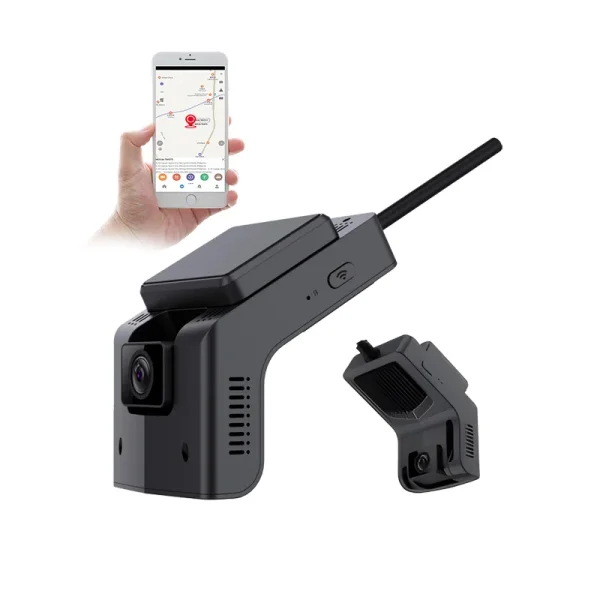
A modern AI vehicle driver monitoring system for fleet management typically relies on dual-channel video capture to establish complete situational awareness. The combination of a forward-facing camera and an inward-facing camera enables simultaneous observation of road conditions and in-cab behavior.
The front camera, with a wide viewing angle and full-HD resolution, ensures consistent visibility of traffic flow, road hazards, and surrounding vehicles. This supports accurate reconstruction of events, even in complex urban driving conditions.
Meanwhile, the interior camera—equipped with light sensors and infrared night vision—maintains visibility regardless of lighting. This ensures uninterrupted monitoring during night shifts, tunnels, or poorly lit environments. For fleets operating around the clock, such continuity is essential for maintaining consistent oversight standards.
AI-Powered Driver Behavior Analysis Beyond Simple Video Recording
What differentiates an AI-enabled driver monitoring platform from standard dash cameras is not the footage itself, but how that footage is interpreted. AI models analyze driver posture, attention levels, and behavioral patterns in real time.
Instead of passively recording events, the system actively detects unsafe behaviors such as distraction, fatigue, or abnormal movements. These insights allow fleet managers to identify systemic risk patterns rather than isolated incidents.
Over time, aggregated behavioral data supports targeted driver coaching, policy refinement, and route optimization—without relying on subjective reports or manual video review.
Night Vision and Low-Light Monitoring in High-Utilization Fleets
Many fleets underestimate the operational importance of consistent night-time monitoring. Delivery fleets, ride-hailing vehicles, and cross-city logistics often operate during late hours, when visibility risks are highest.
An AI vehicle driver monitoring system with infrared night vision ensures that interior activity remains visible even in complete darkness. This is not only a safety consideration but also a compliance safeguard for fleets required to document in-cab activity.
From an operational perspective, consistent low-light monitoring eliminates data gaps that would otherwise skew driver behavior analysis and risk assessment.
Real-Time Remote Monitoring Through Mobile Applications
One of the most impactful operational advantages of AI vehicle driver monitoring systems for fleet management is remote accessibility. Through a dedicated mobile or cloud-based application, fleet operators can view live video feeds, driving paths, and system alerts regardless of physical location.
This capability fundamentally changes how fleets respond to incidents. Instead of relying on delayed reports or second-hand information, managers can remotely verify situations as they unfold. This reduces response times, improves decision accuracy, and minimizes unnecessary vehicle downtime.
For distributed fleets operating across cities or regions, centralized visibility becomes a strategic advantage rather than a logistical burden.
GPS Tracking and Route Intelligence as an Integrated System
GPS tracking is most valuable when it is tightly integrated with video and AI analytics. An AI vehicle driver monitoring system for fleet management does not treat location data as an isolated feature; instead, it contextualizes driving behavior within specific routes, traffic conditions, and time frames.
Driving paths are continuously recorded and replayable, allowing managers to analyze route efficiency, identify high-risk segments, and optimize dispatch strategies. When combined with behavioral alerts, GPS data helps pinpoint not just where an issue occurred, but why it occurred in that location.
This level of insight supports both safety management and operational planning without increasing administrative complexity.
Continuous Recording and Intelligent Data Management
Fleet vehicles generate large volumes of video data, making efficient storage management essential. Loop recording with intelligent overwrite ensures continuous operation without manual intervention.
By automatically replacing the oldest footage when storage limits are reached, the system guarantees uninterrupted recording while preserving recent and relevant data. This approach balances operational continuity with practical storage constraints.
More importantly, AI-flagged events can be prioritized for retention, ensuring that critical footage is not lost while routine driving data cycles naturally.
Emergency Response and SOS Integration for Fleet Safety Assurance
An often-overlooked component of driver monitoring systems is emergency response capability. Integrated SOS buttons allow drivers to trigger immediate alerts in critical situations.
When activated, the AI vehicle driver monitoring system can instantly transmit location data, live video, and contextual information to fleet operators. This creates a direct communication bridge between drivers and management during emergencies, reducing uncertainty and improving response coordination.
For fleets operating in high-traffic or high-risk environments, this function becomes a vital layer of operational resilience.
Data-Driven Decision Making Without Operational Overload
One concern fleet managers frequently express is data overload. An effective AI vehicle driver monitoring system for fleet management avoids this by converting raw data into actionable insights rather than overwhelming dashboards.
AI-driven summaries, trend analysis, and behavior scoring help management focus on systemic improvements rather than isolated anomalies. This supports long-term performance optimization without requiring additional personnel or manual analysis.
Over time, this data-centric approach fosters a culture of continuous improvement grounded in objective metrics rather than assumptions.
Strategic Value for Long-Term Fleet Optimization
Beyond immediate safety and monitoring benefits, AI driver monitoring systems contribute to long-term fleet sustainability. Improved driving behavior reduces vehicle wear, minimizes incident-related downtime, and supports consistent service quality.
As regulatory environments evolve and customer expectations rise, fleets equipped with intelligent monitoring infrastructure are better positioned to adapt without disruptive operational changes.
Rather than acting as a surveillance tool, a well-implemented AI vehicle driver monitoring system becomes an operational partner—quietly working in the background to improve efficiency, safety, and transparency.
Final Thoughts on AI Vehicle Driver Monitoring for Fleet Management
Experience shows that the true value of an AI vehicle driver monitoring system for fleet management lies in its integration depth and operational consistency. When video, AI analytics, GPS tracking, and remote access work as a unified system, fleet oversight becomes proactive rather than reactive.
For fleet operators seeking scalable control, reliable data, and sustainable performance improvements, AI-driven monitoring is not a trend—it is a foundational capability for modern fleet management.